Work that gets on with itself.
We build systems that answer enquiries, book appointments, sort your inbox, find customers and hire. Then we run them for you.
Try one belowFlip a switch to see what each kind of system does. Left alone, the console runs a sample day on its own: real jobs, made-up numbers.
How it works
From a pile of repeat work to a system that runs it.
Scroll, and the map draws itself.Eight steps, one map.
Every business has a mountain of repeat work. Calls, quotes, chasing, posting, reading.
First we map where the hours go. A short look at your week, one page of notes.
Then we draw the system on the map, before anything gets built.
We build it. One system for each pile of repeat work.
We connect it to what you already use. Calendars, inboxes, WhatsApp, spreadsheets, your booking software.
Then it runs. Work flows through on its own. A person watches from the cabin, every day.
When one part works, we add the next. One desk, then a team, then the whole company.
Hours back every week, without hiring for them. Your first plan is two lines away.
First plan
Tell us about your business, in two lines.
Say what the business is and what takes the time. In about twenty seconds you get a first draft: which systems we would build first, in what order, and what the first week looks like. Claude writes the draft. Email it to yourself and Vibhu gets a copy to read before you talk.
A first draft from two lines. The real plan comes after a call, written by a person, with a price and a date in it.
Try it
Talk to a desk we run.
Two front desks we built, one for a dental practice and one for a gym. Ask what a patient or a member would ask. Nothing you book is real, but the replies are worked out on the spot, not scripted. The same desk can sit on your website, WhatsApp or Instagram.
Want one answering for your business? Book a 30-minute call
Under the hood
Three of the systems we run.
There are more. These are three we can show without naming anyone: the real workflows, as they look in the tool that runs them.
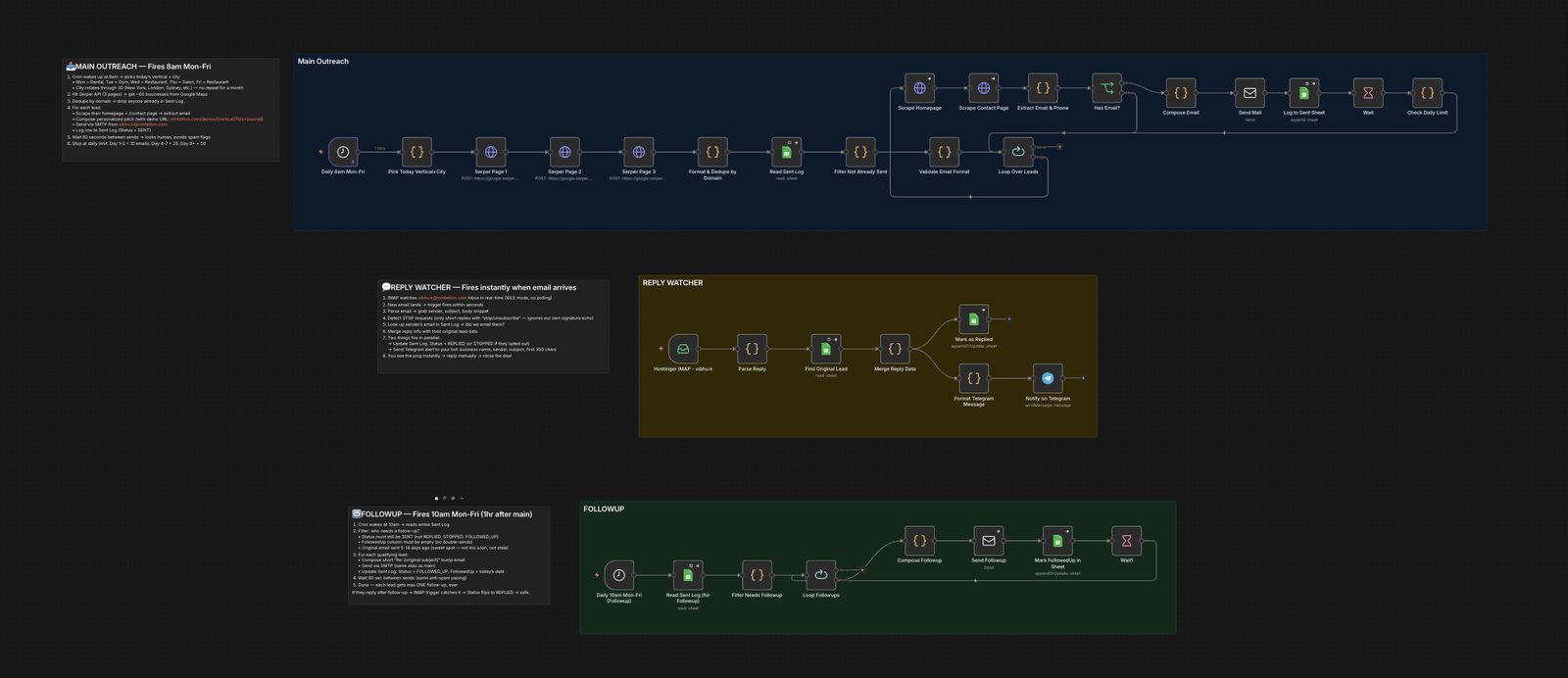
The lead engine
At seven each morning it picks a city, finds businesses that match, checks each one, writes each a personal email, sends it, and follows up for five days.
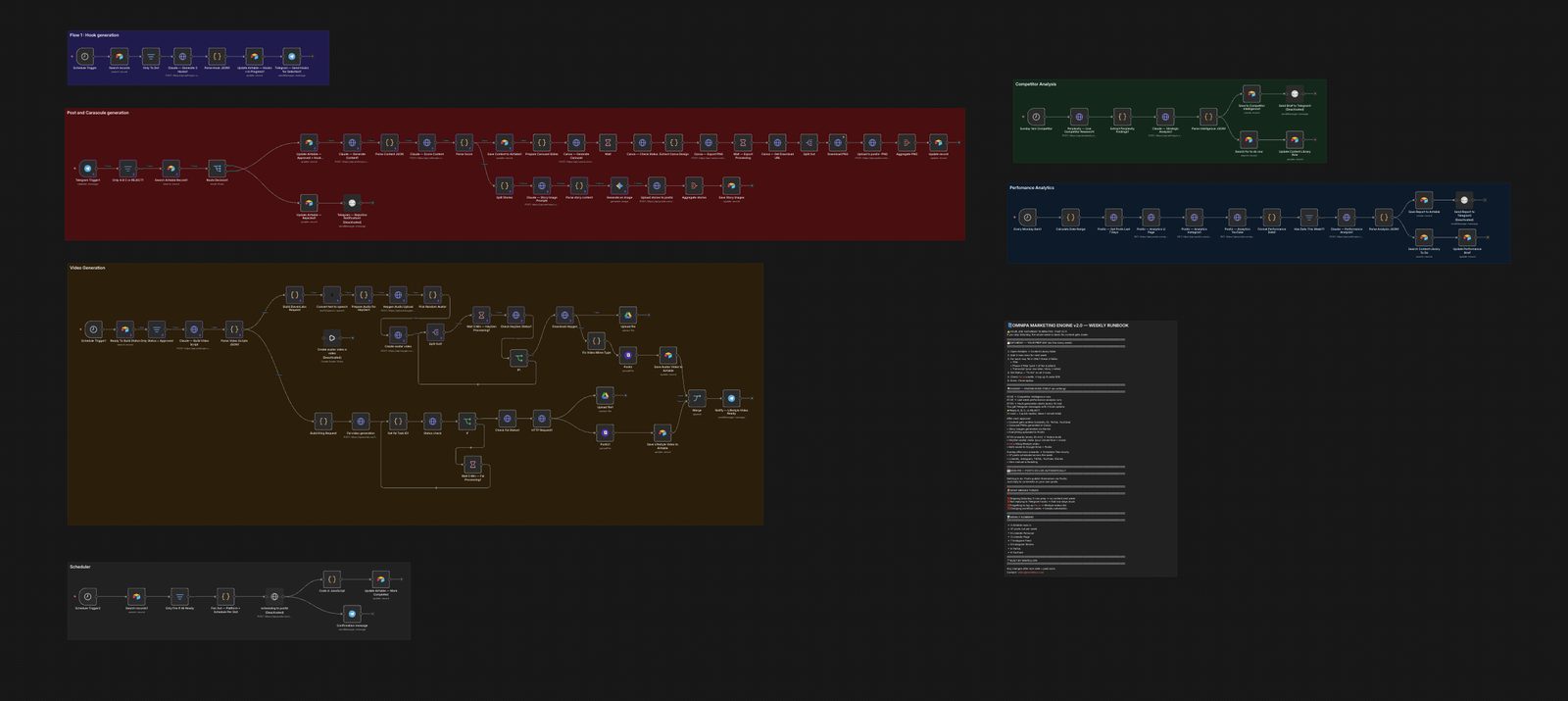
The content engine
One brief on a Tuesday morning becomes a fortnight of posts, drafted, checked by a person, and scheduled across six channels.
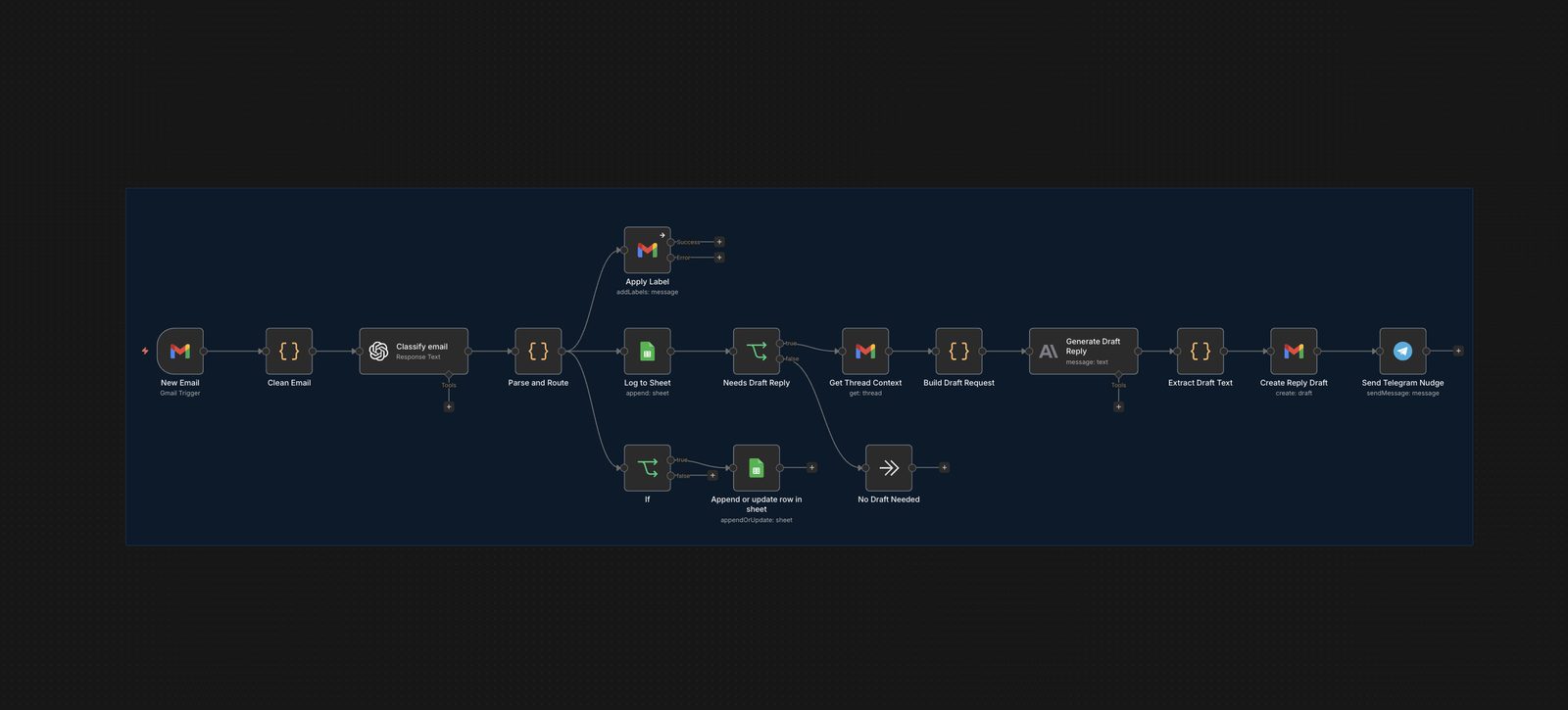
The inbox
A new email lands. It is sorted, checked against the calendar, read with its thread, drafted in the owner’s voice and labelled. The owner is nudged if it needs a decision.
Questions
The things people ask on the first call.
What kinds of business automation do you build?
AI front desks that answer customers and book appointments on your website, WhatsApp and Instagram. Lead generation that finds and writes to the right businesses. Email triage that drafts replies. Content and marketing engines. CV screening and onboarding. Stock control. And the odd jobs in between, whenever they repeat and have rules.
How long does a build take?
A front desk can be answering within days. Most systems take two to four weeks from the written plan to going live, because we test them on your real data first. The plan gives you a date.
What does it cost?
It depends on what it has to do and what it has to talk to, which is why there are no prices here. You get a number in the written plan, before you commit to anything.
Who looks after it once it is live?
We do. Running it is part of the job, not an add-on. It is watched daily, and you get a short note when something needs a decision from you.
What happens when it breaks?
We usually see it before you do. Every system is built to fail loudly to us and quietly to your customers: it takes a message and hands over, rather than making something up.
Do I need to be technical?
No. You need to know your own business and be able to say what a good day looks like. We handle the rest and explain it in plain words.
What is it built with?
n8n, a tool that connects apps and moves work between them, does the plumbing. Claude, a language model made by Anthropic, does the reading and writing. The rest is what you already use: Google or Microsoft calendars, WhatsApp, Instagram, your booking or practice software, your spreadsheets.
Talk
Tell us the job you would like to stop doing.
Thirty minutes with Vibhu, no slides. You leave knowing whether that job is worth automating, whatever you decide to do next.
Or email us. We reply within a working day.
Mintellion is an automation studio based in Glasgow, led by Vibhu Patel, an Anthropic-certified automation engineer. We design the system, build it, and keep running it once it is live, so the person you talk to is the person who built it. Working with businesses anywhere.